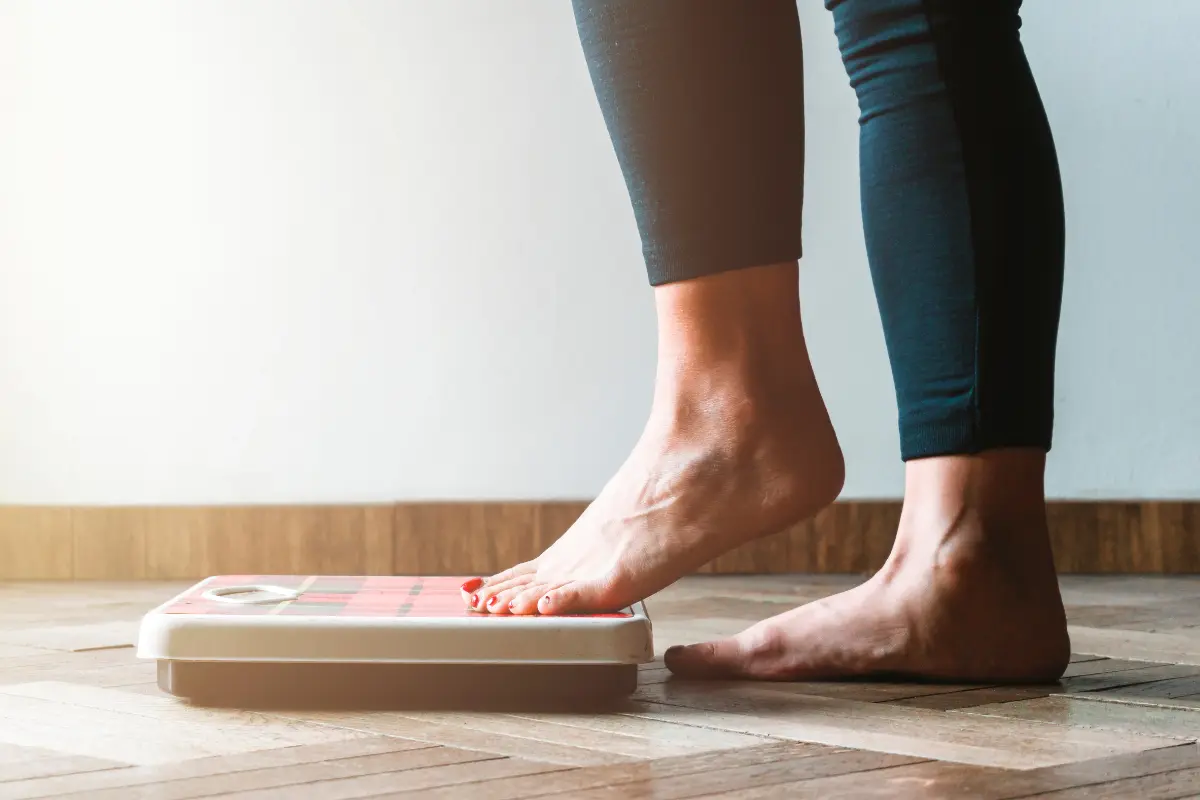
If you've ever stepped on the scale after a really solid week, only to see the number go up (or stay exactly the same), you know the gut-wrenching frustration of feeling like you're doing everything right and getting nothing to show for it.
Here's the thing: we have zero control over the scale. Our body weight is a single data point, and not a very reliable one. If you’re one of those people who rely solely on the scale to track progress, here are five things you’re missing.
1. How Much Water You're Holding
Your body weight can fluctuate by 2 to 5 pounds in a single day based on water retention alone. Ate a salty meal last night? You're probably holding more water. Is it that time of the month? Water retention spikes. Stressed out? Cortisol can cause your body to hold onto fluid. Had a tough workout? Inflamed muscles retain water as part of the recovery process.
None of that is fat gain. All of it shows up on the scale.
When you see a number you don't like, the first question to ask isn't "what did I do wrong?" It's "what's going on with my body today?"
2. Whether You're Actually Losing Fat
Weight loss and fat loss aren't the same thing, and this distinction matters more than most people realize.
If you're in a steep calorie deficit and not eating enough protein, you can lose weight that comes primarily from muscle, not fat. The number on the scale goes down. Your body composition gets worse. You feel softer, not firmer, and your metabolism takes a hit.
On the flip side, if you're lifting consistently and eating well, you might be building muscle while losing fat at the same time. The scale barely moves, but your body is changing in exactly the right direction. Your clothes fit differently. You feel stronger. You look better.
The scale can't tell you any of that.
3. How Much Progress You've Actually Made
Progress isn't just a number. It's the workout you crushed when you would've skipped it six months ago. It's the fact that you didn't spiral after a tough weekend. It's ordering off a restaurant menu without anxiety. It's more energy, better sleep, and actually feeling good in your body.
None of that shows up on the scale, and none of it is small.
If you're only measuring success by the number on the floor, you're missing most of the story.
4. What's Actually Working
Here's a common scenario I see way too often with clients: you're consistent for two weeks, the scale doesn't budge, you assume nothing is working, and you quit or switch things up. But your body often makes changes internally before it shows up as weight loss. Hormones are regulating. Habits are forming. Your body is figuring out what's happening.
Week three might've been the week it clicked. You'll never know if you bailed in week two.
Trends matter more than today's number. One weigh-in is noise. Four weeks of data is a pattern you can actually learn from.
5. That You're Doing Better Than You Think
This one's probably the most important. The scale has a way of making you feel like a failure on days when you're actually winning. You stayed consistent. You hit your protein. You chose the salad and also had the birthday cake and neither decision derailed you. That's the whole point.
A good number on the scale can feel validating. A bad one can undo a week's worth of momentum. But your worth, your health, and your progress aren't determined by 0.2 pounds.
The scale is a tool. It's useful when it's one of many data points: energy levels, sleep quality, strength in the gym, how your clothes fit, how you feel. When it becomes the only metric that matters, it stops being helpful and starts getting in your head.
What to Do Instead
I’m not saying ditch the scale entirely. For a lot of people, it's a useful check-in. But here's how to use it in a way that actually serves you:
Weigh yourself at the same time each day (first thing in the morning works well) to reduce daily variability
Look at weekly averages instead of individual readings
Track other metrics alongside it: progress photos, measurements, how your clothes fit, performance in the gym
Check in on how you feel, not just how much you weigh
The goal isn't a number. It's a life where you feel strong, fueled, and in control, without constantly fighting yourself to get there.

Schedule a Free Intro Call
Working Against Gravity has led the macro tracking and health space for over a decade. Our team doesn’t just understand the science of nutrition—we’ve spent years mastering the art of tailoring it to fit your life. That means no cookie-cutter plans, just real strategies that have worked for over 30,000 people.
Schedule a free call with our team to learn how working with a 1-on-1 WAG coach will help you reach your goals.
You Might Also Like